
Naturally Low Growing
Creeping thyme spreads close to the ground, creating a dense, finished look with far less routine mowing than conventional turf.
A Living Alternative to Ordinary Lawn
Create a low-growing carpet of fragrant foliage and seasonal flowers. Creeping thyme brings color, texture, and pollinator activity to lawns, pathways, slopes, and other sunny spaces.

Creeping thyme spreads close to the ground, creating a dense, finished look with far less routine mowing than conventional turf.
Soft green foliage releases an herbal fragrance when touched, while seasonal blooms fill the landscape with color.

Thyme flowers provide a valuable source of forage for visiting bees and other pollinators.
Bring life to slopes, borders, paver gaps, rock gardens, and other sunny areas where mowing is difficult.
Creeping thyme and traditional grass serve different purposes. Thyme shines where beauty, fragrance, lower growth, and lighter maintenance matter most.
| Feature | Creeping thyme | Traditional grass |
|---|---|---|
| Appearance | Flowering, textured ground cover | Uniform green turf |
| Mowing | Occasional shaping or trimming | Regular mowing |
| Water | Regular moisture to establish; lower needs once rooted | Ongoing needs vary by grass type and climate |
| Foot Traffic | Best for light, occasional traffic | Better suited to active play and heavy traffic |
| Best Uses | Sunny lawns, slopes, borders, and paver gaps | Sports, play areas, and heavily used lawns |
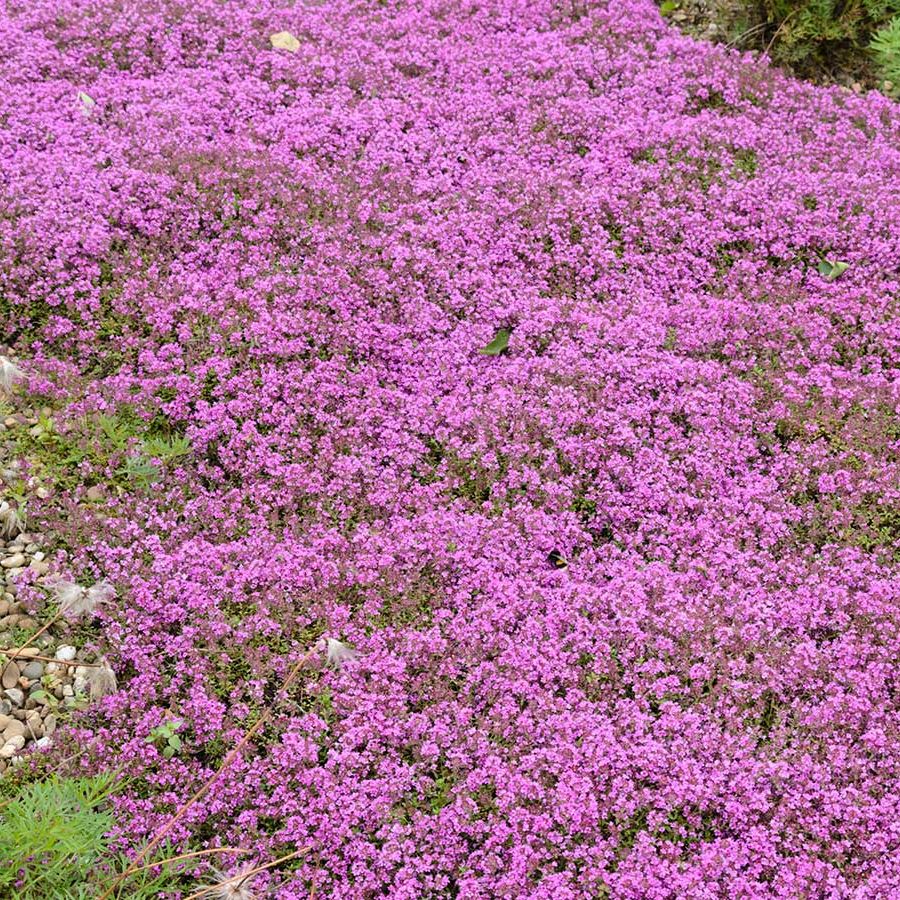
Turn a sunny lawn into a living carpet of green foliage and colorful flowers.
Explore Lawn Planting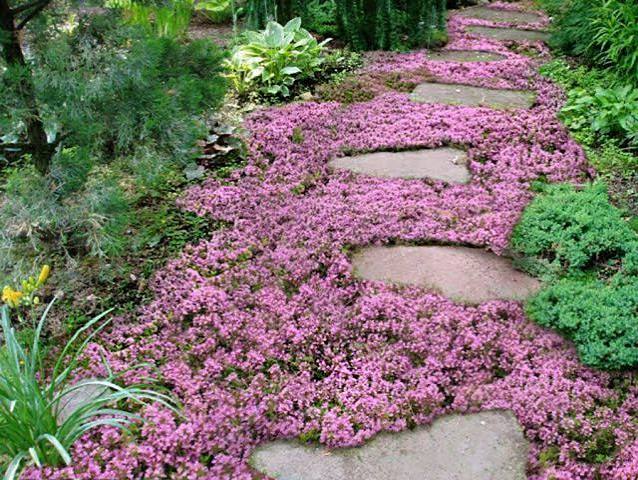
Soften walkways and patios with fragrant growth around stepping stones and garden paths.
See Pathway Ideas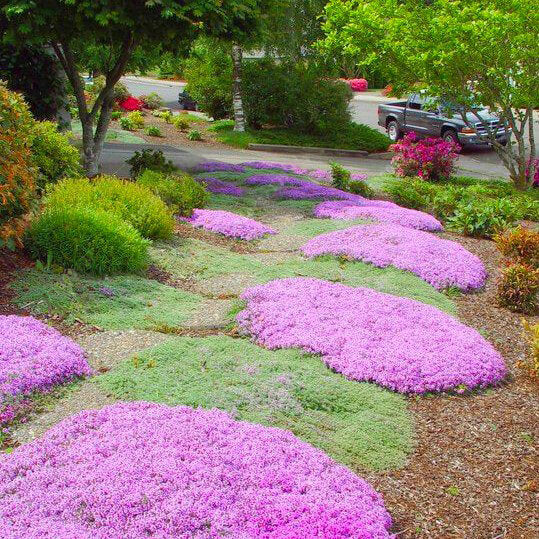
Fill hard-to-mow areas with a spreading plant that adds color and definition to the landscape.
Explore Ground-Cover UsesCreeping thyme thrives when three fundamentals are in place.
Choose an area that receives strong daily sunlight.
Plant where water drains freely instead of collecting around the roots.
For regularly traveled areas, add stepping stones and let thyme grow around them.
Water consistently while seeds germinate and young plants establish. Once rooted, creeping thyme becomes a resilient, lower-growing part of the landscape.
Clear competing growth and create a clean, loosened seedbed.
Spread the seed evenly and press it into the soil for good contact.
Maintain consistent moisture as the seedlings germinate and begin to spread.
Creeping thyme grows naturally close to the ground and does not require the weekly mowing associated with a conventional lawn. Occasional trimming can help shape borders or tidy uneven growth.
Established creeping thyme handles light, occasional foot traffic. For frequently traveled routes, use stepping stones and allow the thyme to grow around them.
Newly seeded areas need consistent moisture during germination and establishment. Once its roots are established, creeping thyme can handle drier conditions than many common lawn grasses.
It can create a flowering lawn alternative in sunny areas with light use. Traditional grass remains better suited to sports, active play, and sustained heavy traffic.
Keep the area watered and weeded while the plants establish. Once creeping thyme fills in, routine care is generally focused on edging, occasional trimming, and maintaining healthy drainage.
Seed offers a practical way to cover more area than planting individual thyme plugs. It requires preparation and patience while the plants establish and spread.
Start growing a fragrant, flowering ground cover for your lawn, pathways, borders, and sunny garden spaces.